Tracking Your Inner Weather: A Yearly Mood Tracker
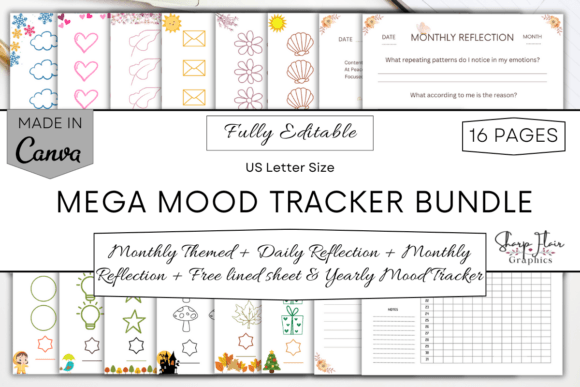
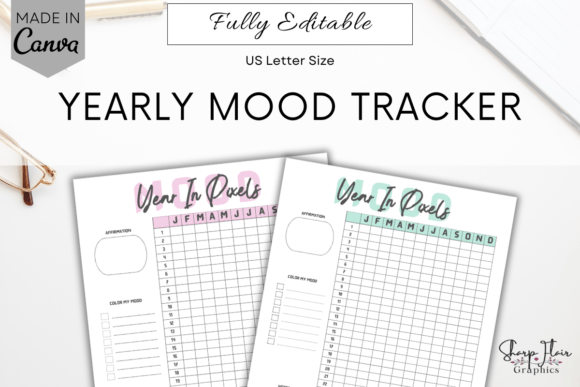
Think about your favorite app for a moment. The sleek design, the intuitive buttons, the satisfying feeling when everything works just as you hoped. That’s the experience we’re aiming to recreate on paper with a simple, powerful tool for self-awareness. The Yearly Mood Tracker Canva Template isn’t about complex analytics or clinical diagnosis; it’s a visual journal, a personal map of your emotional landscape over the course of twelve months. At its core, it’s a clean, minimal grid—a calendar devoid of clutter, waiting for your color.
Each column represents a day, a small space for you to assign a hue based on your inner state. The beauty lies in its intentional blankness. There are no predefined moods like “joyful” or “anxious” stamped onto the page. That absence is its greatest strength. You create your own color code. Is deep blue your “calm and focused” day? Does a vibrant orange signify “energized and creative”? This act of personalization transforms the template from a generic sheet into a meaningful, confidential document that speaks your unique emotional language.
The Designer’s Perspective: Why This Template Works
From a design standpoint, the Yearly Mood Tracker template succeeds because it prioritizes function through form. The layout uses a straightforward, sans-serif font style (easily editable in Canva) for dates and headers, ensuring readability is never sacrificed. The grid is spacious, preventing the feeling of overcrowding that can make daily tracking feel like a chore. The overall style is modern typography applied to a classic journal format, yielding a tool that feels both contemporary and timeless.
Its personality is neutral and supportive, like a well-designed notebook. It doesn’t shout with decorative elements; it provides a calm canvas. This makes it incredibly versatile. A blogger might use it to track creative energy cycles alongside their posting schedule. An entrepreneur could correlate mood patterns with business performance or team dynamics. A crafter might note which days high focus led to the most satisfying project completion. Because you receive two editable pages via a Canva link, you can adapt the background, tweak text elements, or adjust fonts to align with your personal brand identity or aesthetic preference before printing, or use it digitally.
Beyond Personal Use: A Tool for Creative Professionals
While the immediate application is personal reflection, the commercial and creative potential of this template is significant. Consider a therapist or wellness coach looking for a tangible, non-digital tool to offer clients. This editable journal interior can be customized with a practice’s branding, fonts, and color suggestions, becoming a branded part of a care package. Publishers in the self-help or mindfulness space could incorporate a version into physical books or downloadable resources.
For marketers and content creators, understanding one’s own creative rhythms is gold. Using the yearly mood tracker to log days of high inspiration, productive focus, or necessary rest can inform a more sustainable content calendar. The visual data—that block of “green” productive days in April, the scattered “yellow” uncertain days in November—provides insights far more intuitive than a list in a note-taking app. It turns subjective experience into objective, visual pattern recognition, a key principle in both data design and self-management.
Implementing Your Tracker: Practical Guidance
Start simple. When you first access the PDF and follow the Canva link to the editable versions, resist the urge to redesign everything immediately. Print it as is, or with only minor font edits, and use it for a month. The goal is to build the habit, not perfect the design. Choose 5 to 7 colored pencils, markers, or digital fill colors, and define what each one means for you. Write that key lightly on the margin. Your codes might evolve, and that’s fine—the template is forgiving.
The act of coloring a column each evening becomes a tiny ritual of reflection. It asks the quiet question: “What was the prevailing weather inside me today?” Over weeks, you’ll see streaks and clusters emerge. You might discover that three “calm” blue days consistently follow a particularly social weekend. Or that your “creative” orange sparks appear more often on days after you’ve exercised. These are your patterns, your data.
For those editing in Canva, think about readability and contrast. If you change the background to a darker shade, ensure your date text remains clear. The template’s strength is its clean hierarchy; maintain that. Font pairing, if you add instructional text, should be minimal—perhaps a friendly handwritten font for titles paired with the clean sans-serif for the grid. Remember, this is a working document, not a display poster. Its professionalism comes from its clarity and utility.
From Patterns to Insight: The Long-Term Value
A year’s worth of colored columns is a powerful visual artifact. It’s a non-judgmental record that externalizes your experience, allowing you to review it with perspective. This can inform life decisions, creative projects, and wellness strategies. An artist might plan a major project during a historically “energized” season. A small business owner noticing a link between certain tasks and “drained” moods might delegate or reschedule those tasks.
The final output, whether a printed sheet in a binder or a digital page on your tablet, serves as a consistent touchpoint. Unlike mood-tracking apps that can get buried among notifications, this physical or printable tracker has a dedicated presence. Its simplicity ensures you use it, and using it generates the insights. It embodies the principle that good design removes friction, and removing friction allows meaningful habits to flourish.
The Yearly Mood Tracker Canva Template is more than a digital product; it’s a framework for self-observation. By providing a structured yet fully customizable canvas, it empowers you to design not just the page, but the practice itself. It turns the abstract concept of “mood tracking” into a concrete, sustainable, and visually rewarding activity, offering a unique window into the rhythms that shape your creative and personal life.