Understanding the Vector Infographic on Black Background
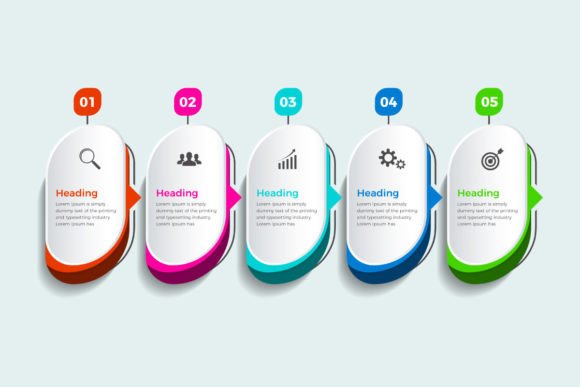
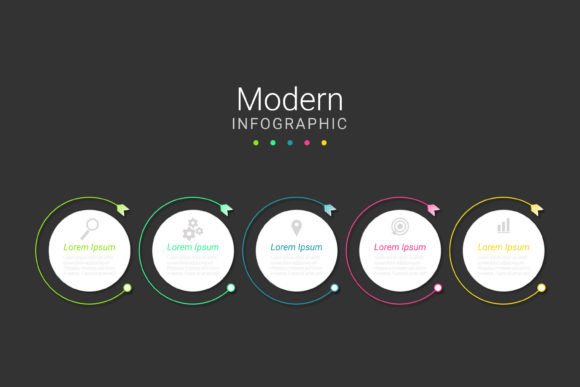
In the realm of visual communication, the vector infographic on black background represents a specific and powerful design choice. This format combines the clarity of scalable vector graphics with the dramatic contrast and focus provided by a dark canvas. Typically, such an infographic utilizes flat design elements—clean, simplified icons and shapes without gradients or textures—arranged to convey information, processes, or data in an easily digestible format. A common example is the flat vector timeline infographic template with 5 levels, which structures a narrative or progression into distinct, ordered steps.
Core Characteristics and Appeal
This design style is not merely an aesthetic preference; it is a functional tool. The black background serves several key purposes. It creates high visual contrast, making the colored vector elements and text stand out prominently. This can enhance readability and viewer focus, reducing visual clutter. Furthermore, a dark backdrop often conveys a sense of sophistication, modernity, or gravity, which can be appropriate for certain topics or brands.
The vector nature of the graphics is equally crucial. Unlike raster images (like standard JPGs), vector graphics (common in AI and EPS file formats) are built from mathematical paths. This means they are infinitely scalable without loss of quality, ensuring the infographic remains crisp whether viewed on a mobile screen or printed on a large poster. The included file types—AI for Adobe Illustrator, EPS for universal vector editing, and a high-resolution JPG for immediate use—provide flexibility for both designers and end-users.
People researching this template are often looking for a ready-made structure to present a linear process, a historical timeline, a development roadmap, or a step-by-step guide. The five-level format offers a balanced framework, providing enough segments to detail a process without overwhelming the viewer with complexity.
Potential Benefits and Advantages
Choosing a vector infographic on a black background can offer distinct advantages. Firstly, it delivers strong visual impact, which can aid in memorability and engagement, especially in digital environments where attention is scarce. The professional and sleek appearance can lend credibility to the presented information.
From a practical standpoint, the availability of vector source files (AI, EPS) is a significant benefit for anyone with access to design software. It allows for full customization: colors can be changed to match a brand palette, icons can be swapped, text can be edited, and the entire layout can be adapted. This makes it a versatile starting point rather than a fixed, immutable image. The high-regulation JPG serves as an easy-to-use option for quick placement in presentations, websites, or documents where editing is not required.
For the audience evaluating such templates, the primary benefit is efficiency. It provides a foundation that bypasses the need to design from scratch, saving considerable time and resources while still offering a polished, professional outcome.
Important Tradeoffs and Considerations
Despite its strengths, this specific infographic style involves several tradeoffs that must be weighed. The most notable consideration is context and audience. A black background may not be suitable for all situations. For instance, if the infographic is intended for print in a low-quality brochure or on certain printers, dark backgrounds can consume more ink and may not reproduce as clearly. In very bright environments or on some screens, a stark black canvas can also cause visual fatigue.
The flat, minimalist design approach—while clean—may sometimes lack the tactile or detailed feel that certain subjects demand. If the goal is to evoke warmth, tradition, or extreme realism, a flat vector design on black might feel too cold or abstract.
Another key consideration is customization depth. While the vector files offer great flexibility, that flexibility is only accessible to users with the requisite software and skill. An individual without Adobe Illustrator may find the EPS or AI files unusable, relying solely on the JPG, which is then a fixed asset. This locks in the design unless further professional help is sought.
When Is This a Strong Fit?
The vector infographic on black background is a particularly strong fit in specific scenarios. It excels in digital presentations, tech industry reports, modern business plans, and any context where a contemporary, authoritative tone is desired. Topics involving innovation, scientific processes, corporate milestones, or product launch timelines often align well with this aesthetic.
It is also an excellent choice when the information needs to be displayed across multiple mediums and sizes. The scalability of the vector assets means one file can serve web, app, and large-format print needs consistently. If your project requires future edits or localization into different languages, having the editable vector source files becomes invaluable.
For the learner or evaluator comparing options, this template fits a need for a structured, visually striking, and professionally credible communication tool, especially for linear, step-based content.
Situations Where Alternatives Merit Consideration
It is equally important to recognize situations where alternative design approaches might be more effective. If the target audience includes younger children or is in a field associated with creativity and vibrancy (like arts or hospitality), a lighter, more colorful, or illustrated background might foster better connection and engagement.
For purely print-focused projects with tight budget constraints where high-quality ink usage is a concern, or where the final output will be in black-and-white, starting with a light-background template could be more practical. Similarly, if the infographic needs to be embedded within a website or document that already has a dark theme, a black-background infographic might blend in too much, losing its contrasting advantage.
Alternatives also exist in the infographic structure itself. A 5-step timeline is linear and sequential. If the information to be conveyed is non-linear—such as a network map, a comparative diagram, or a cyclical process—a different template type (like a wheel, mind map, or comparison table) would be a more logical and clearer choice.
Practical Decision-Making Insights
To determine whether a flat vector timeline infographic on a black background aligns with your goals, conduct a quick self-evaluation. Begin by defining the core purpose of your infographic. Is it to explain a process, showcase history, or outline steps? If the answer is yes and it fits into five clear segments, the structure is appropriate.
Next, assess your delivery environment. Will this be viewed primarily on digital screens in presentations, websites, or social media? The black background likely enhances it. Is your brand identity aligned with modern, sleek, or premium visuals? Then the aesthetic fits. Conversely, if your primary output is mass-produced physical flyers or you need a softer, more approachable tone, consider other options.
Finally, honestly evaluate your technical resources. Do you or your team have the ability and software to edit AI or EPS files? If so, the template offers long-term value. If not, and you only need a single, static image for a one-off project, the high-resolution JPG may suffice, but you lose future adaptability.
Aligning the Tool with Your Needs
The decision ultimately hinges on alignment between the tool's characteristics and your specific needs for communication. A vector infographic on a black background is a specialized instrument. It is not a universal solution but a highly effective one for its intended applications.
By understanding its construction—from the scalable vectors to the impactful dark canvas—you can better judge its utility. By weighing its benefits of impact and customization against the tradeoffs of context and technical requirements, you make an informed choice. By matching it to scenarios that demand structure, modernity, and clarity, or recognizing when a different visual approach is warranted, you ensure your message is delivered effectively.
For the researcher, evaluator, or learner, this template represents more than just an image; it is a potential conduit for information. Your selection should be guided not by the trendiness of the design, but by a pragmatic assessment of how its form will serve your content's function and connect with your intended audience.