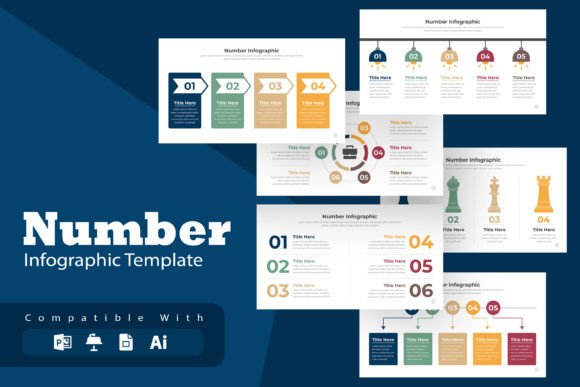
The 7-Step Infographic Design Template: Your Blueprint for Clear and Compelling Visual Communication
In a world saturated with information, the ability to distill complex ideas into clear, engaging visuals is more than a skill—it’s a necessity. This is where a structured Infographic Design Template with 7 Steps becomes an indispensable tool. It provides a systematic blueprint, transforming the often overwhelming process of visual creation into a manageable, step-by-step journey. Whether you're a marketer, educator, entrepreneur, or content creator, this template offers a reliable framework to craft infographics that not only capture attention but also communicate your message with precision and impact.
The Challenge: Transforming Data into Understanding
Many of us face a common dilemma: we possess valuable data, a compelling story, or a crucial process that needs to be shared, but presenting it in a way that resonates feels daunting. A dense report or a lengthy presentation often fails to connect. The core challenge lies in visual translation—how to convert information into a format that is immediately accessible, memorable, and actionable for your audience. Without a clear methodology, the design process can become chaotic, leading to inconsistent visuals, muddled messaging, and wasted time.
How the 7-Step Template Provides a Solution
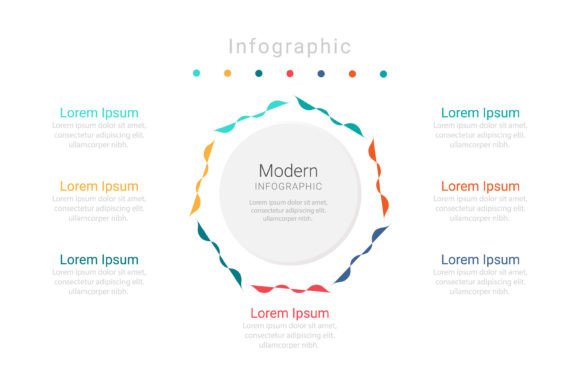
The Infographic Design Template with 7 Steps directly addresses this chaos by introducing order and intentionality. It isn't merely a set of graphical assets; it's a strategic process embedded within a visual format. Typically, this template, often visualized as a vector infographic design template with 7 levels or steps, guides you from conceptualization to final output. By adhering to its structured progression, you ensure that every design decision serves the ultimate goal of clarity and engagement.
Walking Through the Practical 7-Step Process
Let's explore how this template translates into actionable steps, moving from abstract idea to concrete visual.
Step 1: Define Your Core Objective and Audience
Every successful infographic begins with a clear purpose. Are you explaining a process, comparing data, raising awareness, or simplifying a complex topic? Simultaneously, identify your audience—their knowledge level, interests, and needs dictate your design's tone and complexity.
Step 2: Research and Gather Your Data
Solid information is the foundation. Collect accurate data, statistics, key points, and source materials. This step ensures your visual is trustworthy and substantive, moving beyond mere decoration to become a credible resource.
Step 3: Craft the Narrative and Hierarchy
Information alone isn't a story. Organize your gathered material into a logical flow. Decide on the key narrative: a linear progression, a comparison, or a cyclical process. This hierarchy will directly inform the structure of your Infographic Design Template with 7 Steps.
Step 4: Select the Visual Structure and Template
Here, the template itself becomes central. Match your narrative to a suitable visual format. Does your story fit a vertical step-by-step flow, a horizontal timeline, or a segmented circular diagram? Choosing the right structure from the template ensures the form supports the function.
Step 5: Design and Visualize Each Step
With your structure locked, begin the actual visualization. Use icons, charts, illustrations, and concise text to represent each of your seven key points or phases. High-quality resources like an Ai illustration CC EPS illustration CC file can be invaluable here, providing scalable, professional graphic elements to populate your template.
Step 6: Apply Consistent Branding and Style
Unify the design with your color palette, typography, and graphic style. Consistency across all seven steps creates a cohesive, professional-looking piece that reinforces brand identity and improves readability.
Step 7: Finalize, Review, and Export
The final step involves meticulous review for accuracy and clarity. Then, export your infographic in the required formats. Utilizing a High regulation JPG Image ensures crisp quality for web use, while the native vector files (AI, EPS) allow for future edits and scalability for print.
Tailoring the Template to Different User Needs
The versatility of the Infographic Design Template with 7 Steps lies in its adaptability. Different users will approach it with distinct goals.
- Marketing Professionals: They might use the template to visualize a customer journey or product benefits, focusing on steps that drive conversion and brand storytelling.
- Educators and Trainers: Their application leans toward simplifying academic concepts or training procedures, ensuring each step builds upon the previous for optimal learning.
- Non-Profit Organizations: Their focus could be on awareness campaigns, using the seven steps to outline a problem, its causes, and a call-to-action solution.
- Small Business Owners: They may employ the template to explain a service process or showcase company values, prioritizing clarity and trust-building with potential clients.
Practical Outcomes and Real-World Applications
Implementing this structured template yields tangible benefits. It streamlines collaboration within teams by providing a shared visual framework. It drastically reduces design time by eliminating guesswork. Most importantly, it produces infographics that perform—they improve comprehension, increase shareability on social media, boost website engagement, and enhance presentation effectiveness. For instance, a well-executed 7-step process infographic can replace a lengthy manual page, serve as the centerpiece of a blog post, or become a powerful slide in a pitch deck.
Key Recommendations for Successful Implementation
To maximize the utility of your Infographic Design Template with 7 Steps, keep these considerations in mind.
- Simplicity is Key: Resist the urge to overcrowd each step. Let visuals lead, supported by minimal, powerful text.
- Test for Flow: Before finalizing, ask someone unfamiliar with the topic to follow the infographic. Their ease of understanding is the ultimate test.
- Invest in Quality Assets: Leverage professional, licensed graphic resources (like CC EPS files) to elevate the design without compromising on legal use.
- Think Beyond Digital: The vector nature of these templates means they are perfect for high-quality prints for posters, brochures, and event materials.
Ultimately, the Infographic Design Template with 7 Steps is more than a design shortcut; it's a methodology for clear thinking and effective communication. It empowers you to bridge the gap between information and insight, ensuring your valuable message is seen, understood, and remembered. By adopting this structured approach, you transform raw data into a compelling visual story that connects with your audience and achieves your communication goals.